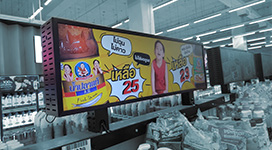
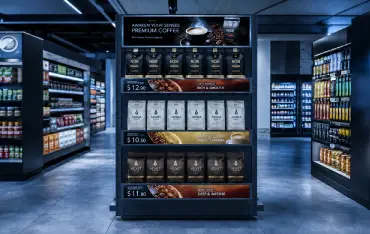
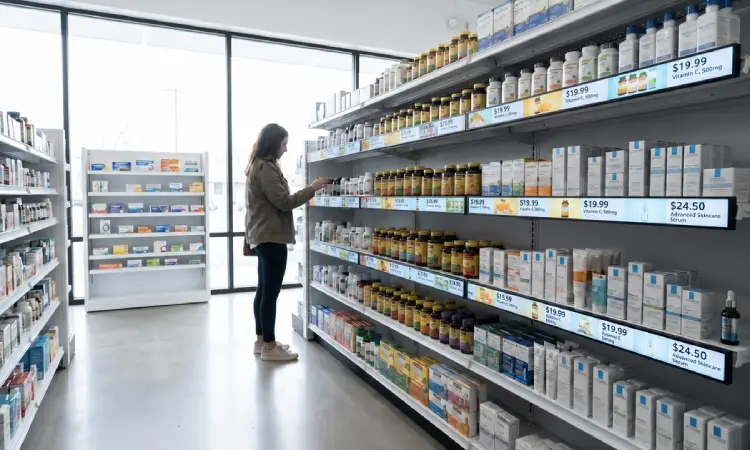
Modern retailers are increasingly moving away from passive signage toward dynamic shelf edge lcd display ecosystems. On a standard 600mm shelf tier, the window of influence is remarkably small.
Customers make split-second decisions as they navigate high-traffic aisles. Static paper systems create a massive "Operational Lag"—a delay between corporate strategy and shelf-level execution. By implementing 60cm smart shelf display hardware, this lag is neutralized, allowing for instantaneous tactical pivots that respond to real-time consumer behavior.
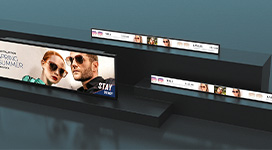
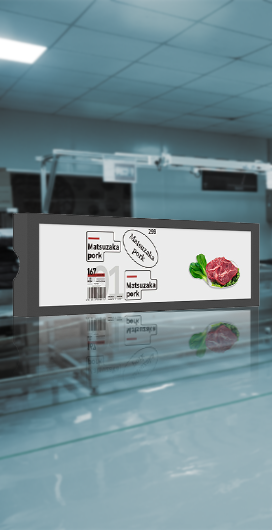
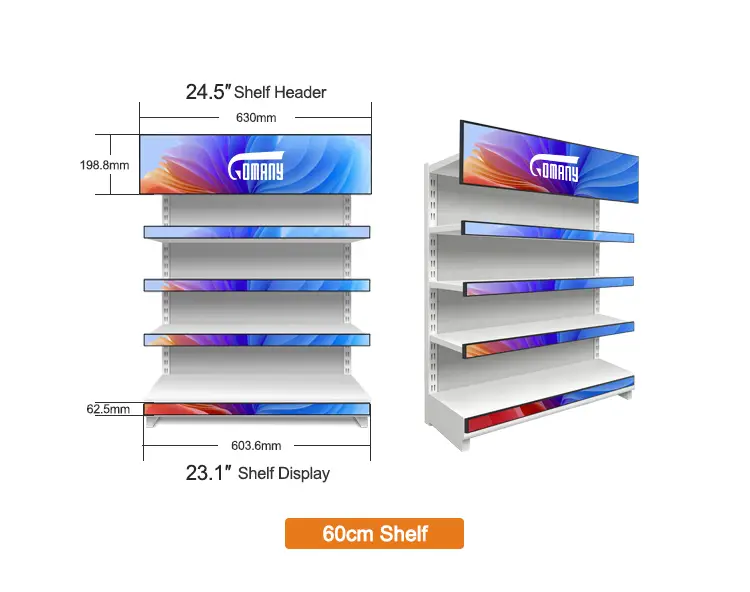
The engineering synergy of the 3+1 tiered configuration (three 23.1" units for shelf edges and one 24.5" header display) provides the most comprehensive coverage for a 60cm bay.
This architecture is designed for a 1:1 Edge-to-Edge Fit, ensuring that the digital shelf display units align perfectly with the metalwork of the shelf, creating a seamless "Digital Facade."
This integration is the foundation of Tiered Visual Merchandising, where different heights of the shelf perform specific cognitive roles in the shopping journey.
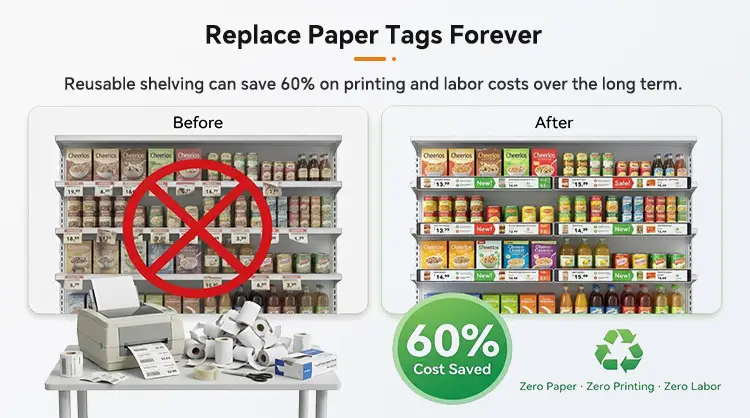
One of the most significant advantages of moving to a shelf lcd display system is the total elimination of recurring material waste. Traditional 600mm shelf management relies on a constant cycle of paper, ink, and plastic holders.
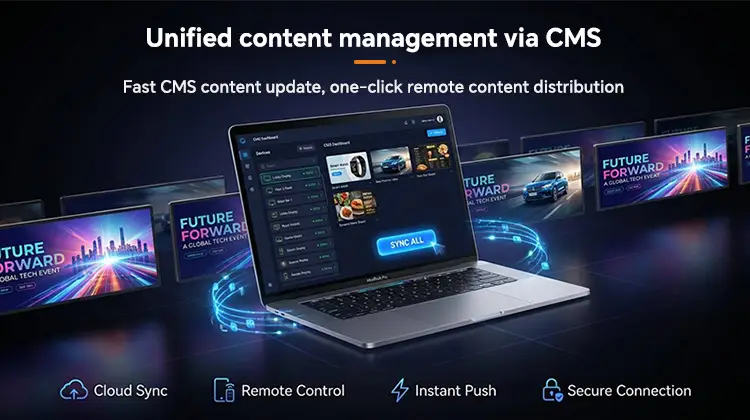
Material Cost Optimization is achieved by replacing these physical consumables with digital assets. A centralized cloud-based CMS (Content Management System) enables Remote Content Management, allowing a single operator at the headquarters of a convenience chain to update thousands of tiers across a global network with a single click.
This remote agility eliminates the need for "Truck Rolls"—sending technicians or staff to physical store locations just to change a price tag or promotional banner.
Beyond the obvious labor savings, this process ensures that the store environment remains "Agile." For instance, Remote Content Management allows for real-time inventory-linked updates; if a product goes out of stock in a specific aisle, the digital shelf display can automatically switch to a high-margin alternative, preventing "Visual Dead Space" on the 600mm shelf. This fluidity is the hallmark of modern convenience store digital signage.
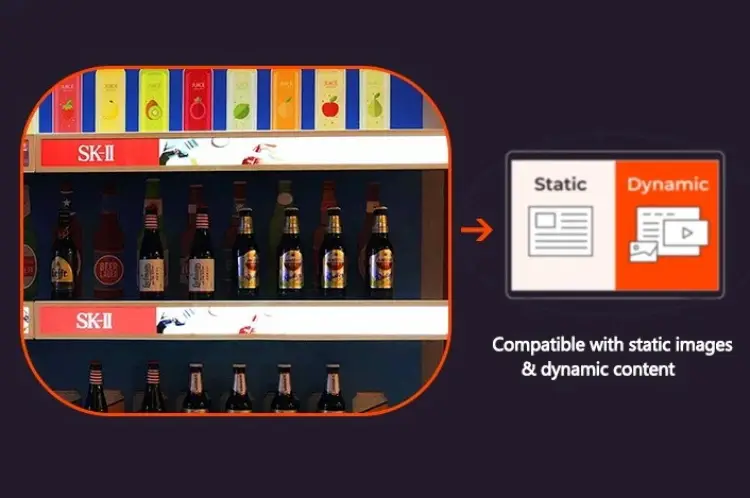
To drive engagement on a 60cm shelf, static images are no longer sufficient. High-performance shelf edge lcd advertising display units must offer comprehensive multimedia format support.
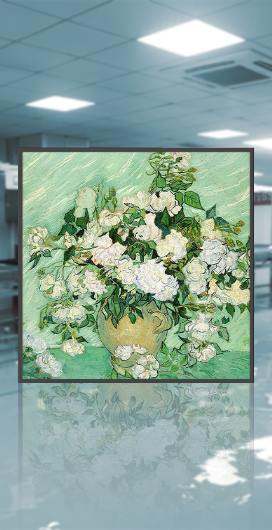
By integrating dedicated hardware decoders, Gomany's displays can seamlessly transition between 4K H.265 video, dynamic GIFs, and scrolling text overlays. This multimedia versatility allows retailers to showcase the "Product in Action"—for example, showing the effervescence of a cold beverage directly on the shelf edge where the product is held.
Complementing this is the scheduled playback engine. Retail is cyclical, and the consumer's needs shift throughout the day.
Scheduled Playback allows the 60cm shelf array to automatically update its persona based on a pre-defined timeline.
In the morning hours, the 24.5" Header can prioritize breakfast bundles and coffee promotions. As the day transitions to the "Lunch Rush," the entire 3+1 array can pivot to healthy meal options and quick-grab snacks.
This automated synchronization ensures that the shelf lcd display is always relevant to the current shopper profile without requiring manual intervention from on-site staff.
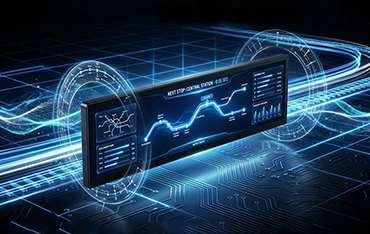
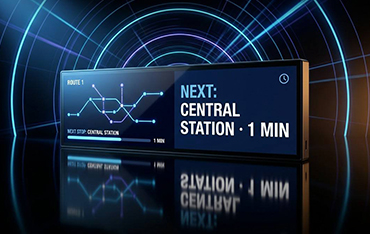
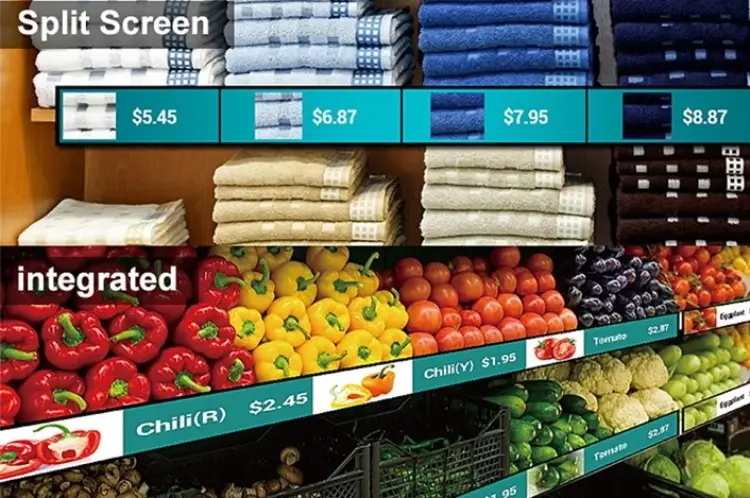
Stretched LCDs offer a unique "Ultra-Wide" aspect ratio that traditional monitors cannot match. To maximize the utility of the 600mm bay, it use smart split-screen technology.
This logic allows a single 23.1" or 24.5" bar screen to be partitioned into multiple independent zones. For example, the left 70% of the screen can run a high-impact HD video advertisement, while the right 30% acts as a dynamic electronic shelf label, displaying the real-time price, QR code for loyalty points, and nutritional icons.
Smart Split-Screen is particularly effective for "Cross-Category Upselling." On a 60cm tier holding premium snacks, the split-screen can dedicate a portion of the display to show a complementary beverage, effectively using the shelf edge lcd display as a digital cross-merchandiser.
Because this partitioning is handled at the firmware level, there is zero latency between the zones, ensuring that the Industrial display reliability is maintained even under complex multimedia loads. This intelligent allocation of "Pixel Real Estate" turns every centimeter of the shelf edge into a multifaceted sales tool.
For a procurement manager, the decision hinges on the Benefits of 600mm digital shelf displays compared to the Total Cost of Ownership (TCO). In global convenience chains, every operational expenditure must be strategically justified.
Let's analyze the long-term economic transition from traditional systems to the 3+1 solution:
Scenario A: Traditional Paper Labels
Traditional systems rely on significant recurring labor costs for printing, sorting, and manual tag insertion across 60cm tiers. This creates a hidden operational drain that compounds annually, often exceeding the cost of the shelf itself within a short period.
Furthermore, revenue leakage from price mismatch errors at the register adds another layer of financial instability. The total commitment of resources over a 5-year cycle often highlights a "Sunk Cost" that modern retailers can no longer afford.
Scenario B: 3+1 Digital Solution
In contrast, the digital shelf display investment represents a shift from high recurring OPEX to a manageable initial CapEx.
By leveraging Wholesale shelf edge LCD factory pricing, retailers secure a durable asset that reduces annual maintenance overhead by over 70%.
Energy consumption is kept negligible through our optimized Daisy Chain architecture, while Cloud CMS subscriptions replace the complex logistics of physical label shipping. The incremental CapEx is rapidly offset by labor savings, turning the 600mm shelf into a high-yield profit center with a profound TCO optimization.
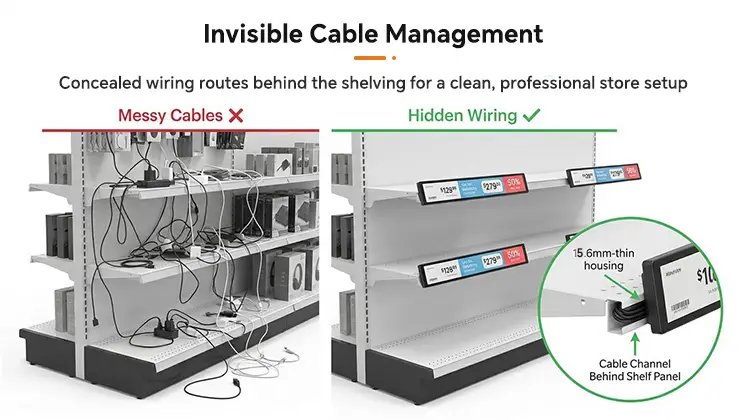
In the world of high-end convenience store digital signage, aesthetics are as critical as technical specs. A shelf cluttered with exposed cables and bulky power bricks destroys the consumer's perception of quality.
Addresses this through daisy chain architecture. Traditional retail screens require a "Star" wiring topology—where every display has its own dedicated cable. In a 3+1 shelf array, this would result in a chaotic tangle of lines.
With daisy chain architecture, the 600mm shelf setup utilizes a serial connection logic. Power and data are fed into the master unit and then passed sequentially to the subsequent screens via high-speed, low-profile interconnects.
This breakthrough allows the entire 3+1 stack to operate off a single DC input. This engineering feat enables **Hidden Wiring Aesthetics**, where all interconnects are tucked behind the shelf's structural rails or within the display's own industrial-grade aluminum housing.
The result is a "Floating Pixel" effect, where the content appears to emerge directly from the shelf hardware without any visible technology infrastructure.
This visual purity is a hallmark of shelf advertising lcd factory excellence, ensuring that the focus remains entirely on the brand message.
Conclusion
The digital transformation of the 600mm shelf represents a strategic pivot for modern convenience chains.
By prioritizing 60cm smart shelf display technology that supports remote content management, multimedia format support, and smart split-screen logic, retailers move beyond the limitations of manual labor and physical consumables.
The integration of Daisy Chain Architecture ensures that this technological power is delivered with Hidden Wiring Aesthetics, maintaining the premium environment that today's shoppers demand.
Choosing a partner that understands the nuances of Industrial display reliability is the first step in future-proofing your store's infrastructure.
Request a Customized 60cm Shelf Digital Blueprint Today!
FAQ
Q: Does smart split-screen affect the playback smoothness of HD video?
A: No. Because our shelf edge lcd advertising display units utilize dedicated hardware processing, the partitioning of "Pixel Real Estate" is hardware-accelerated, ensuring zero lag between zones.
Q: Can material cost optimization be quantified beyond just physical savings?
A: Yes. It includes the removal of logistics overhead, storage costs for consumables.
Q: Does the LCD shelf display support automatic brightness adjustment?
A: Yes. Integrated light sensors allow the units to adjust luminance based on the store's ambient lighting, further contributing to Material Cost Optimization through energy efficiency.