In the professional B2B display sector, Luminance (measured in Nits or cd/m2) is often the only metric procurement teams focus on. However, raw brightness on a spec sheet is a deceptive indicator of performance if it cannot be sustained across various observation points.
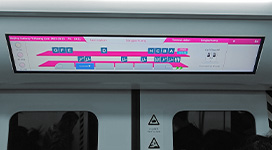
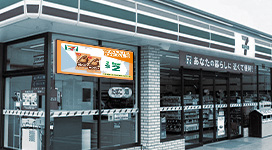
For a stretched LCD display installed in a high-traffic retail environment or a railway PIS system mounted on a platform ceiling, luminance attenuation at extreme angles isn't just a technical flaw—it is a direct threat to the total cost of ownership and ROI.
When a customer or passenger moves off-axis and the screen "washes out," the marketing message or critical information loses its impact, rendering the investment inefficient.
Professional engineering demands we look past the backlight unit power consumption and focus on the viewing cone efficiency.
The core challenge in TFT-LCD technology is its inherently non-Lambertian emission profile.
Liquid crystals act as light valves, but the stack of polarizers and glass substrates causes light to deviate.
To combat this, we must deploy advanced optical film solutions that manage photon recycling and directional gain. This article will dissect the four critical optical factors that determine whether your display maintains professional-grade visibility or fades into a gray haze.
Polarization Recycling Logic via DBEF and APCF
The single greatest source of energy waste in a standard TFT-LCD is the bottom polarizer. Traditionally, this component absorbs approximately 50% of the light generated by the LED backlight, converting it into wasted heat.
For B2B applications where thermal management is critical, such as outdoor high-brightness displays, this heat buildup can lead to liquid crystal clearing or isotropic transition failures.
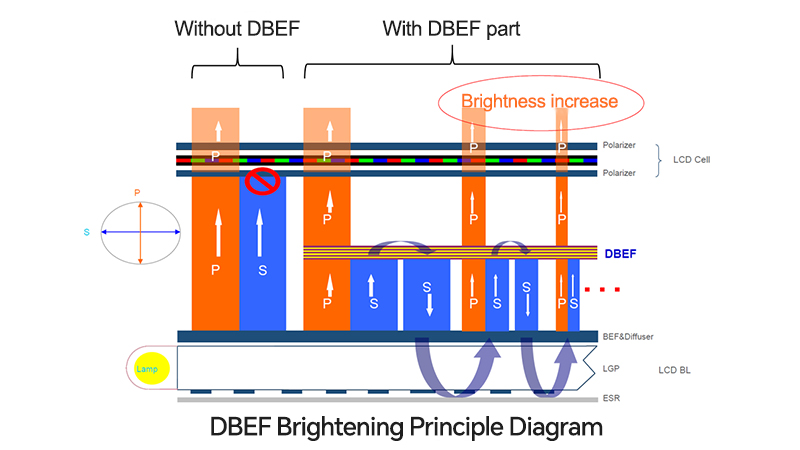
This is where DBEF (Dual Brightness Enhancement Film) becomes indispensable. Unlike absorptive polarizers, DBEF utilizes multi-layer polymer technology to reflect the "wrong" polarization state back into the BLU, where it is scattered and "recycled" into the correct state.
The implementation of DBEF or APCF can improve optical efficiency by 30% to 60% without increasing the power draw of the LED strings.
For a B2B buyer, this translates to higher viewing angle brightness because more photons are successfully channeled through the LCD cell.
More importantly, by recycling light rather than absorbing it, we reduce the thermal stress on the optical bonding adhesive and the color filter layer, significantly extending the displays lifetime.
In Gomanys engineering practice, DBEF is a standard requirement for any mission-critical display exceeding 1000 nits.
The Trade-off of High Refractive Index Prism Film
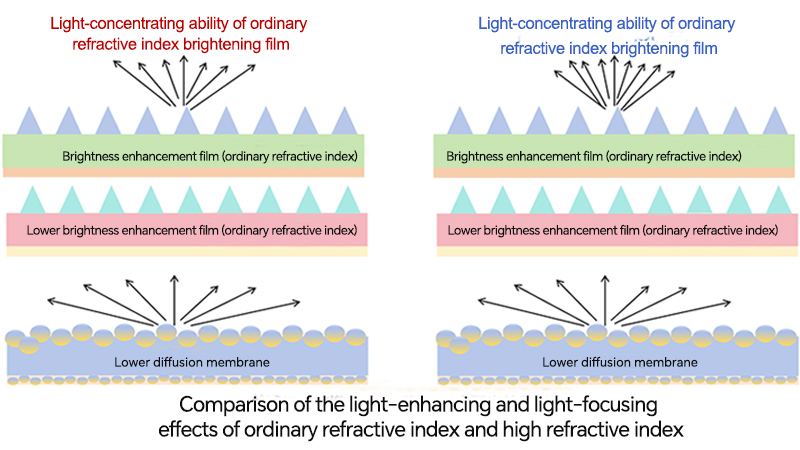
While DBEF manages polarization, prism film (often referred to as BEF or Brightness Enhancement Film) manages the spatial distribution of light.
The physical principle is based on refraction and total internal reflection. By utilizing a micro-replicated structure of high refractive index prisms, we can redirect light that would otherwise escape at wasted wide angles back toward the normal axis.
This creates a massive increase in on-axis luminance, which is essential for high-brightness monitors used in direct sunlight.
However, engineering is always a game of trade-offs. The "gain" provided by prism film comes at the expense of viewing angle.
As we concentrate light toward the center, the luminance attenuation at 60 or 70 degrees becomes much sharper.
For an industrial display meant for a single operator, this is acceptable. But for a digital signage display in a mall, it creates a "tunnel vision" effect.
To mitigate this, we employ crossed BEF configurations or specialized rounding prism structures that balance the peak gain with a smoother brightness decay curve.
Understanding the half-value angle is critical here; a professional-grade display must ensure this angle is wide enough to cover the intended audiences movement path.
POP Composite Films and Asymmetric Viewing Compensation
In specific B2B scenarios, such as retail shelf-edge displays, the viewing requirements are highly asymmetric.
A customer standing in an aisle looks at the screen from above or from the side, but rarely from below.
Standard optical stacks often fail here because they assume a symmetrical viewing cone. This is where POP or COP technology enters the design phase.
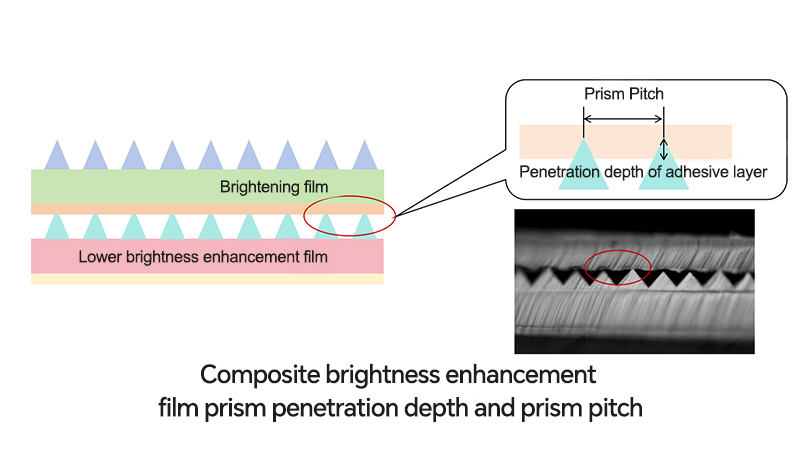
By integrating multiple optical functions into a single composite film, we can tune the optical path to favor specific directions.
POP films effectively reduce moire patterns and optical interference that often occur when stacking separate films.
By precisely controlling the pitch and angle of the micro-prisms in a composite layer, we can engineer an asymmetric viewing angle.
This ensures that the luminance remains high at the specific "sweet spot" where buyers are most likely to interact with the display.
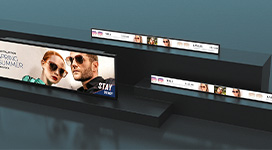
Furthermore, POP technology reduces the overall thickness of the optical stack, which is vital for the ultra-slim form factors required in modern bar LCD displays.
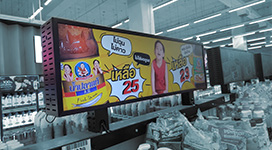
In the engineering of a shelf edge LCD, the use of POP allows us to maintain a consistent contrast ratio even when the user is viewing the screen from a 45-degree downward angle.
Multi-layer Diffusion Film and Visual Comfort
A common mistake in high-brightness display procurement is equates "bright" with "good."
However, a display with 2000 nits and poor diffusion creates excessive glare and hot spots, leading to visual fatigue.
In professional environments like control rooms or medical imaging, visual comfort is as important as raw performance.
This is achieved through the strategic use of multi-layer diffusion films.
These films use light scattering particles to homogenize the light coming from the LED backlight.
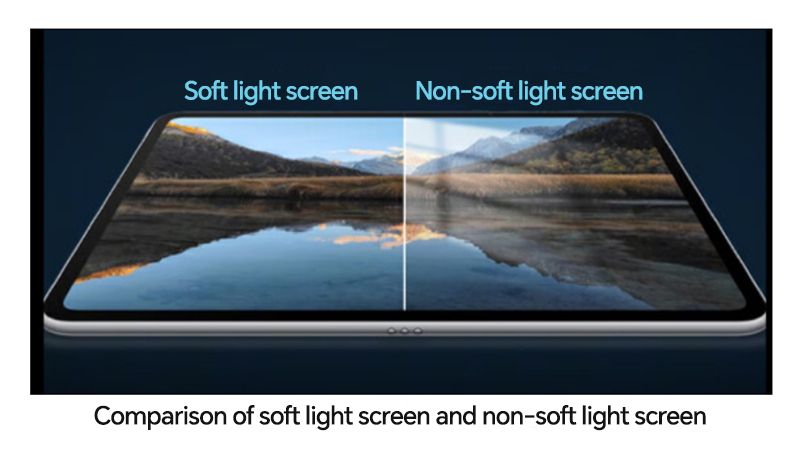
By adjusting the haze value and total transmittance of the diffusion film, we can create what the industry calls a "Soft Screen."
This doesnt mean the screen is dim; rather, it means the luminance distribution is perfectly uniform across the entire active area.
For B2B buyers, the haze factor is a critical spec: high haze (80%+) provides excellent uniformity and hides the LED pitch, but it can reduce image clarity.
A low haze film preserves sharpness but may reveal the internal structure of the BLU at certain angles.
Gomanys approach is to use a dual-layer system: a high-haze bottom diffuser to break the LED point sources, and a low-haze top diffuser to provide a smooth finish while maintaining high resolution integrity.
Choosing the Optimal Optical Stack for Your Application
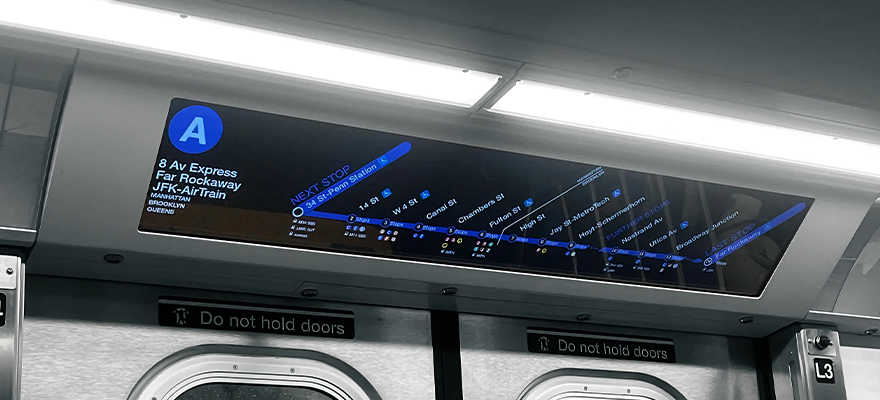
1. Outdoor Transit Hubs (Platform PIS): Priority is on-axis luminance and heat Mitigation. Recommendation: A stack featuring High-Tni Liquid Crystals, DBEF for power efficiency, and a BEF with a 70-degree viewing cone.
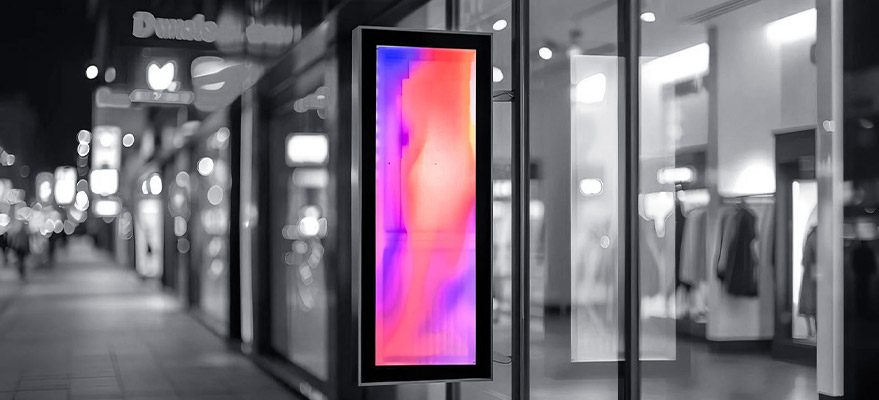
2. High-End Retail (Shelf Edge): Priority is asymmetric viewing and color saturation. Recommendation: POP composite films to optimize downward viewing and low-reflection optical bonding to enhance perceived contrast.
3. Industrial Control Rooms: Priority is visual comfort and longevity. Recommendation: Multi-layer diffusion films with moderate haze and anti-glare coating to reduce reflections from overhead lighting.
At Gomany, we dont just sell panels; we engineer professional display solutions. Every project begins with a ray tracing simulation to predict luminance attenuation and ensure that the final product meets the specific requirements of the deployment site. We understand that in the B2B world, a screen that isnt visible from the right angle is a screen that isnt working.
Conclusion
The battle against luminance attenuation is moving toward even more complex nanostructured films and quantum dot integration. However, the fundamental principles of polarization recycling and prism refraction remain the bedrock of high-performance TFT-LCD design. As a buyer, your focus should be on how these films work together to deliver a stable, high-quality image across the entire viewing cone.
If your current display supplier cannot explain their optical film stack or provide viewing angle data reports, you are likely overpaying for inefficient hardware. Contact Gomanys engineering team today for a deep-dive consultation on your next high brightness or specialized shape LCD project.
FAQ
Q: How to quantify the cost-benefit of DBEF in B2B display projects?
A:DBEF improves optical efficiency by 30%-60% through photon recycling technology.
In a 1500-nit high-brightness project, this translates to directly obtaining 450-900 nits of additional luminance gain without increasing the power consumption of the LED backlight.
This significantly reduces the heat generated by the backlight driver, lowers overall system power consumption by more than 20%, extends display lifetime, and increases project ROI.
Q:Why should buyers focus on "Half-value Angle" instead of just spec sheet luminance?
A:Spec sheet luminance usually refers only to the peak on-axis value. The half-value angle determines the viewing range where brightness drops to 50%.
If this angle is too narrow, it means that when viewers step slightly off-center, the image will rapidly dim or wash out. Therefore, in wide-angle applications like public signage or transit PIS, the half-value angle is the core metric determining real-world visibility.
Q:What are the advantages of POP films in reducing optical interference?
A:Traditional stacking of separate monomer films often generates air gap interfaces, inducing optical interference such as Moire patterns or rainbow rings.
POP integrates two prism structures monolithically onto a single substrate, eliminating the air interfaces, vastly improving light transmittance, and ensuring a pure, artifact-free image.
Q:How can thermal management in high-brightness displays be optimized through optical films?
A:Using APCF or DBEF to replace absorptive polarizers reflects and recycles unusable polarized light rather than absorbing it.
This fundamentally eliminates a massive source of heat buildup in the bottom polarizer.
Since the backlight efficiency is improved, the LED driving current can be lowered, significantly reducing liquid crystal clearing or isotropic transition failures caused by high temperatures.