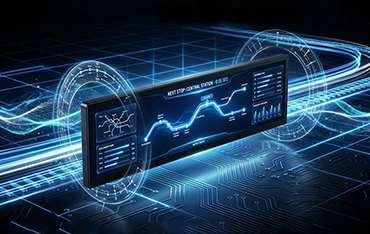
How Ultra-Wide Stretched LCDs Upgrade Metro Passenger Information Systems

Jul,13 2026
Urban rail transit networks are undergoing a rapid technology-driven transformation. As millions of passengers navigate complex metro systems daily, the efficiency of information dissemination directly impacts passenger flow management, operational safety, and overall commuter satisfaction.

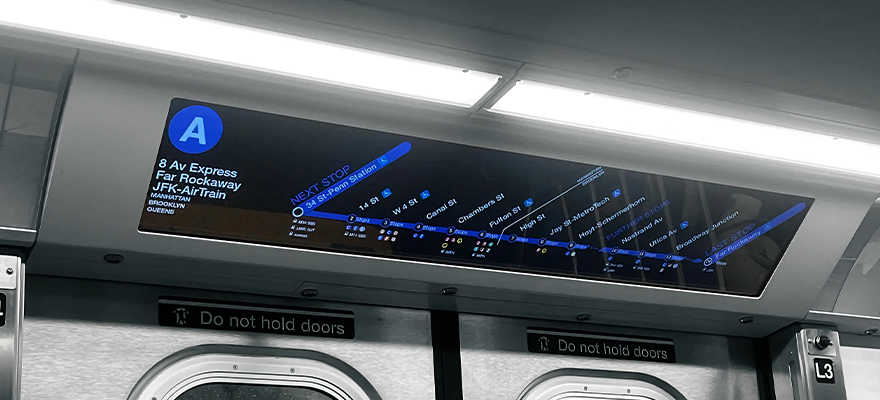
Against this backdrop, deploying next-generation digital display infrastructure has become an absolute necessity. Specifically, the ultra-wide stretched LCD represents a significant leap in engineering technology, replacing outdated static signage and standard 16:9 widescreen monitors with a streamlined, high-aspect-ratio layout that perfectly fits the narrow physical space constraints of modern trains.

By utilizing cutting-edge LCD panel cutting and packaging techniques, these displays provide transit authorities with a dynamic, highly customizable digital signage for transit platform, greatly enhancing capabilities for real-time route tracking, emergency alert broadcasting, and multi-layered media playback.

For rolling stock designers and system integrators responsible for managing train communication networks, migrating to professional transit-grade display modules is a rigorous engineering practice focused on aerospace-level reliability and adaptability to complex environments.

Ordinary commercial displays are fundamentally incapable of withstanding the extreme thermal stress, electromagnetic interference, and relentless structural vibrations inherent in rail transit tunnels. To build an efficient and self-healing Railway PIS system, engineers must look beyond the screen surface.

They must analyze meticulous technical details—from OC panel modifications to specialized thermal interface materials and shock-resistance design—to ensure that rail transit networks operate stably and efficiently throughout their decades-long service cycles.

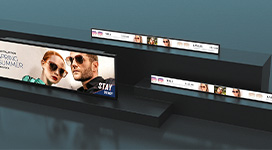
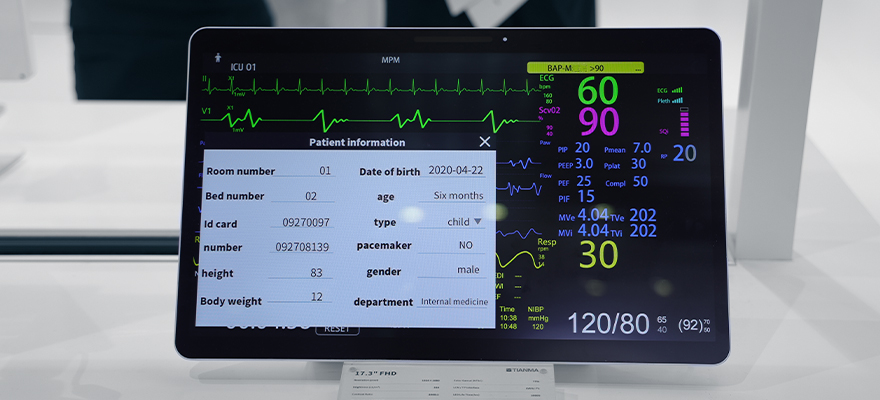
Ultra-wide stretched LCDs have brought convenience to people.


The Evolution of In-Car Information Dissemination in Metro

The history of in-train information delivery demonstrates a continuous struggle to balance limited carriage structural space with the growing demand for real-time information clarity. In the early stages of metro operations, passenger guidance systems relied entirely on mechanical and static media.

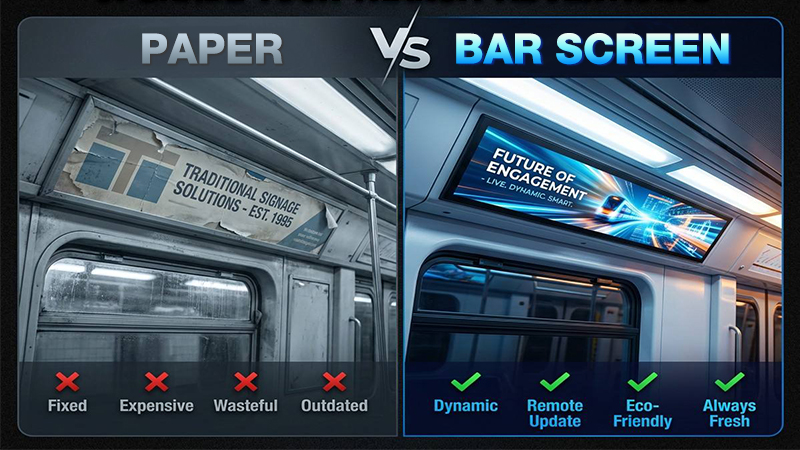
Carriage interiors usually relied on paper route maps inserted into overhead plastic slots, supplemented by manual verbal announcements from train conductors. This static guidance method created significant operational pain points for urban transit departments, as any permanent route adjustments, temporary station closures, or line extensions required physical maintenance teams to board every train in the fleet to manually replace the paper cards.

This labor-intensive manual update process led to high operational expenditures and was incapable of providing real-time information updates during emergency delays or track diversions.

Furthermore, static paper maps failed to meet the accessibility needs of a diverse commuting population. During peak hours, crowded carriages and track noise could easily drown out manual voice announcements, causing tourists, non-native speakers, and hearing-impaired passengers to lose their sense of direction.

In the long run, deploying ultra-wide stretched LCDs in subways is more economical than static or paper-based methods of information transmission.


Why Ultra-Wide Stretched LCDs are Popular in Metro Environments

High Space Utilization

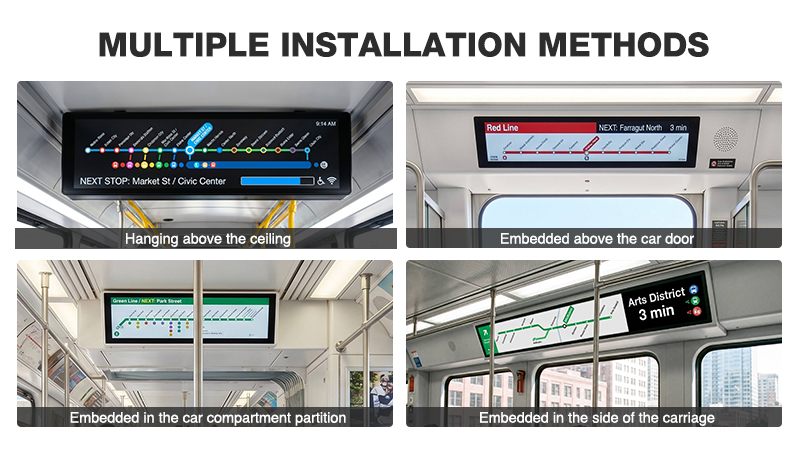
The primary architectural driver for adopting the ultra-wide stretched LCD lies in its unique physical aspect ratio, which perfectly fits the compact spaces of modern rail vehicles. Unlike traditional consumer-grade displays, these bar type displays are specifically engineered to maintain a wide horizontal span while occupying extremely narrow vertical height.

This makes them an ideal choice for direct embedding above carriage doors, in ceiling niches, and within partition structural components—places where standard displays simply cannot fit. By utilizing these previously untapped and highly visible interior spaces, rail transit systems can provide passengers with continuous high-definition visuals without sacrificing valuable carriage headroom or obstructing passenger movement during high-density boarding.


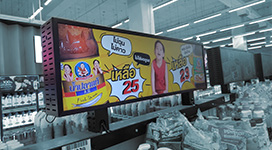
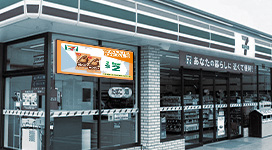
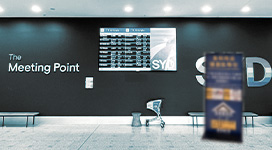
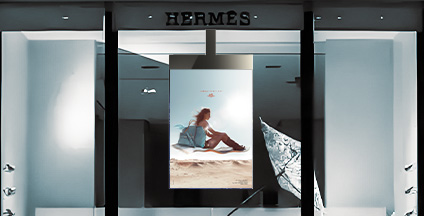
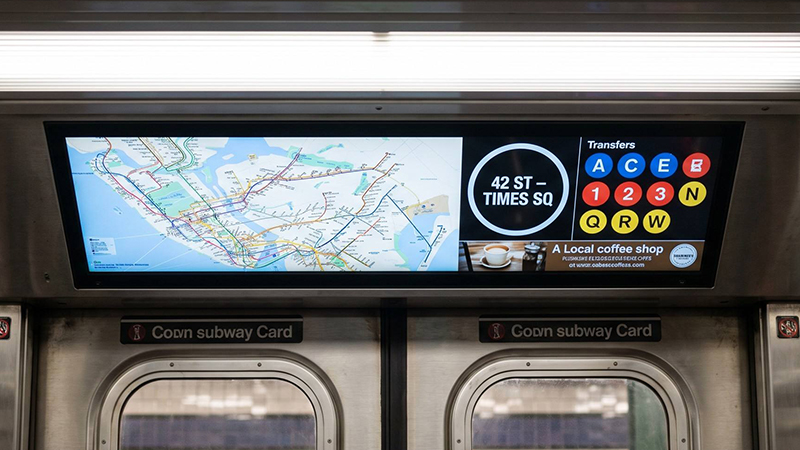
Common scenarios for deploying ultra-wide stretched LCDs in subways

Need precise dimensions for a customized metro project display? Contact our engineers for a feasibility assessment.


Dynamic Split-Screen

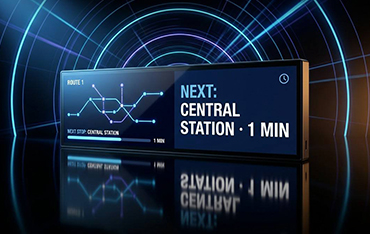
The high horizontal and vertical resolution of a transit-grade ultra-wide stretched LCD display enables powerful dynamic split-screen functionality, significantly improving the efficiency of commuter information delivery.

Through advanced system hardware operation, a single stretched LCD display can be divided into multiple independent content zones.

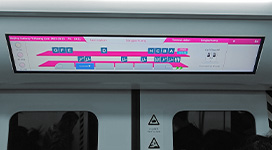
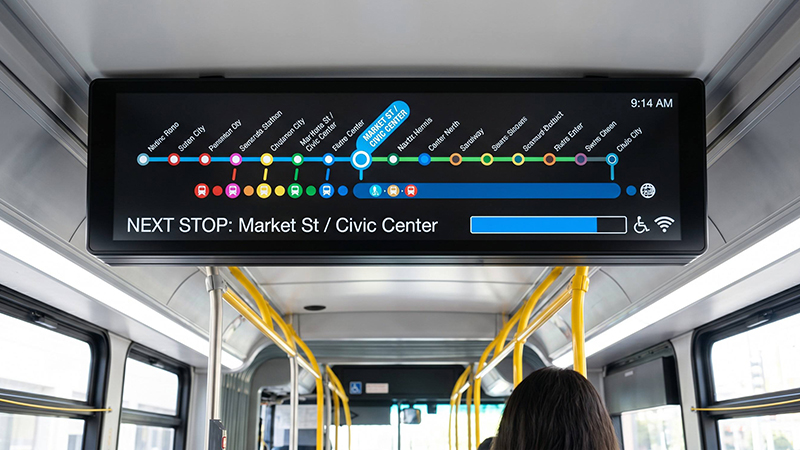
For example, one part of the screen can continuously display a dynamic, color-coded real-time route progress bar indicating upcoming stations and transfer hubs, while the adjacent area can cycle through real-time regulatory notices, local weather forecasts, or high-definition commercial advertisements.

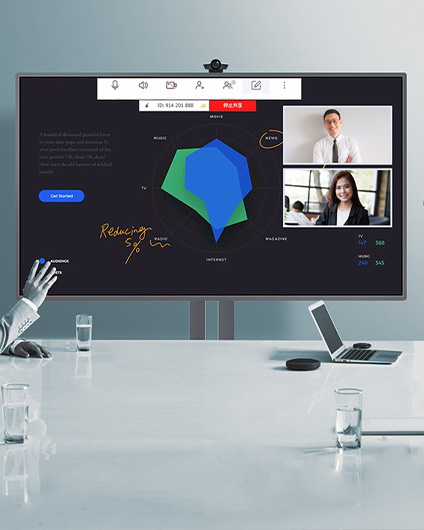
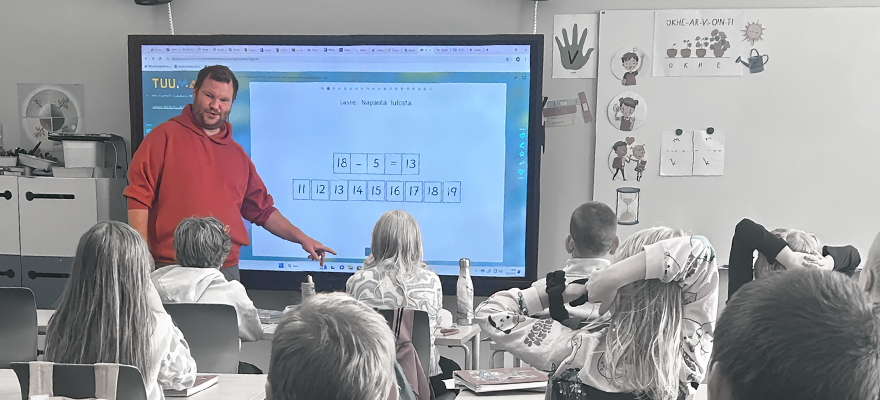
Ultra-wide stretched LCDs can display multiple functions through split-screen functionality.


Wide Viewing Angle

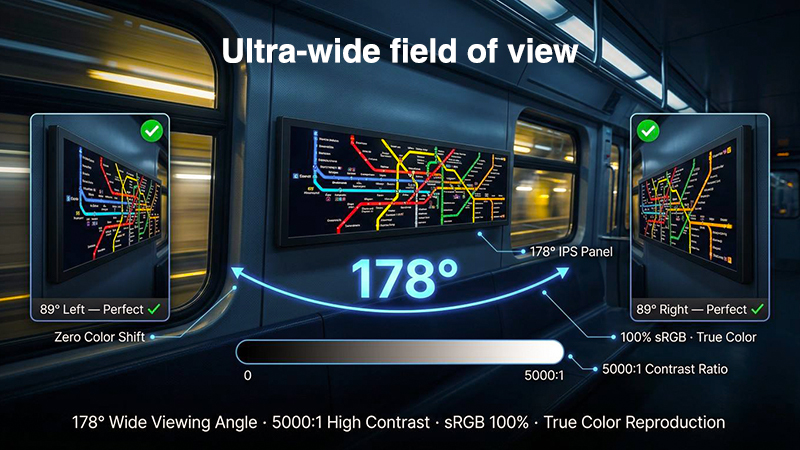
In crowded metro carriages, the positions of passengers relative to information screens vary greatly and are often at extreme angles. Ordinary LCD panels suffer from severe color shifting, contrast degradation, and visual tinting when viewed off-center, making it impossible for passengers standing directly below or at the far sides of the display to clearly read critical route data.

To eliminate this pain point, high-end transit-grade bar type displays utilize advanced In-Plane Switching (IPS) panel liquid crystal technology. This micro-optical structural design ensures a full 178-degree viewing angle in both horizontal and vertical directions, allowing passengers to see high-contrast, color-accurate text and graphics clearly from almost any position in the carriage, eliminating blind spots and ensuring a quality reading experience for all commuters.

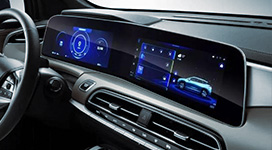
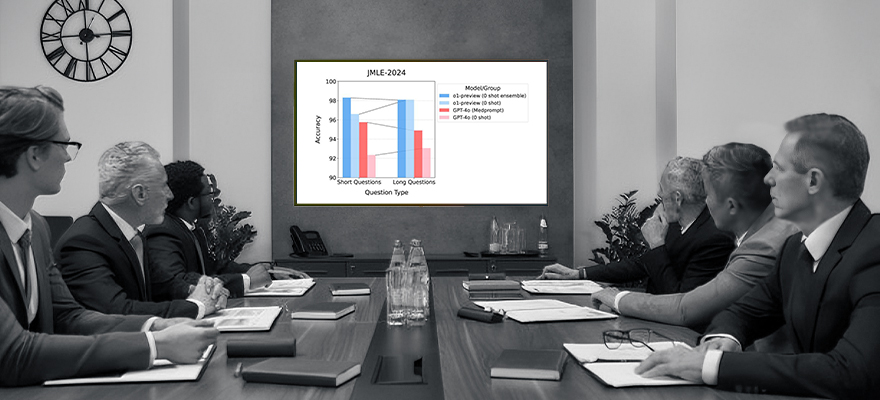
Wide-viewing-angle bar-type displays can meet people's viewing needs.


Essential Elements for Stretched LCD Displays in Metro Operation

Shock Resistance

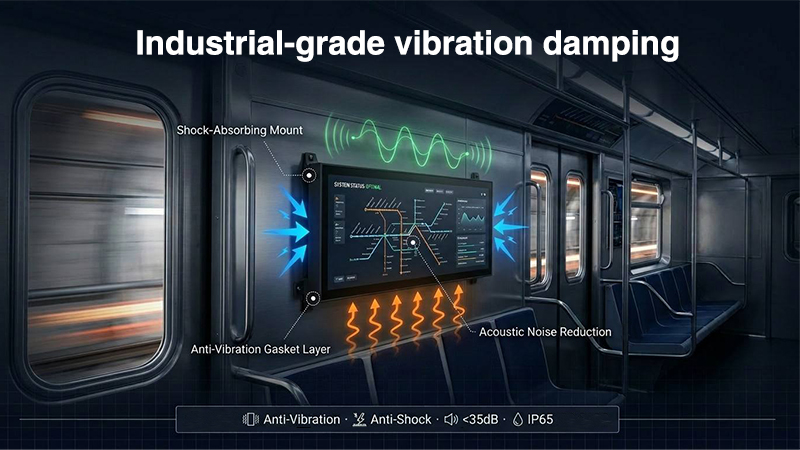
The mechanical environment of an operating metro carriage is exceptionally harsh, characterized by continuous low-frequency track oscillations, violent lateral jittering as the train passes switches, and high-impact deceleration vibrations.

In this environment, ordinary commercial displays quickly suffer from structural fatigue, leading to loose internal components, detached ribbon cables, and micro-cracks at fragile solder joints in driving circuits. To withstand this continuous mechanical stress, the design of industrial-grade digital signage for transit must strictly comply with rigorous mechanical operational standards.

Engineers achieve this structural resilience by using solid-state industrial components and wrapping sensitive circuit boards in high-durability shock-absorbing and noise-reducing materials. 

Additionally, the glass panel itself undergoes special processing. Unlike standard desktop monitors, rail transit-grade displays are manufactured using automated OC Precision Resizing production lines to minimize edge stress and eliminate microscopic cracks along the edge lattice, effectively preventing structural delamination even when the train enters tunnels at high speeds and faces extreme, instantaneous high-speed air pressure wave impacts.

Bar-type displays used in subways or trains have a certain degree of earthquake resistance.


Wide Temperature Range

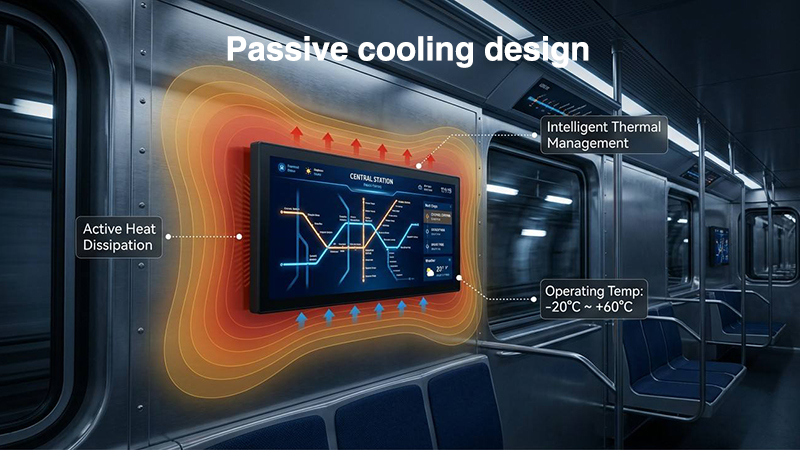
Metro door headers and ceiling mounting slots are extremely compact spaces with almost no active air circulation, making them prone to severe heat buildup. Local temperatures within these sealed enclosures can quickly exceed 60°C. 

Since the Tni of ordinary commercial LCD panels is typically only 50°C, the liquid crystal material will undergo a physical phase change once internal screen temperatures exceed this threshold, degrading into an isotropic state and turning completely black—a failure mode known in the industry as "blackening."


To prevent this catastrophic operational failure, specialized rail transit displays must integrate industrial-grade thermal materials. This advanced passive cooling design ensures that even in the high temperatures of midsummer, when trains are parked in non-air-conditioned maintenance depots, the temperatures of internal electronic components remain far below their critical thresholds, often requiring a high brightness stretched display that is specifically designed to handle thermal loads.

Bar-type displays used in subways or trains have a wider operating temperature range than conventional LCD displays.


Long-Term Continuous Operation

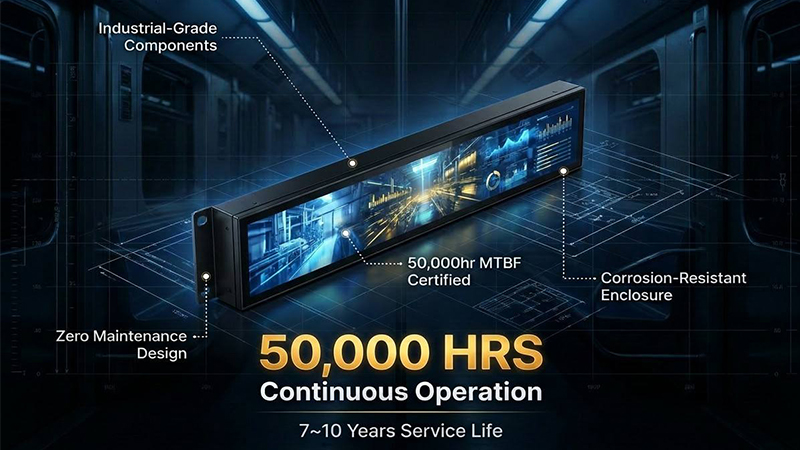
Metro transit networks are systems that operate endlessly, requiring digital display equipment to run continuously 24/7 with zero downtime. Within such a rigorous operational cycle, commercial-grade components exhibit rapid aging.

Backlight LEDs decay quickly, capacitors degrade under continuous voltage, and optical polarizers can warp under long-term exposure to heat and UV radiation. 

To maintain visual consistency and screen readability over an expected service life of 7 to 10 years, a true certified railway LCD display utilizes a strictly certified, long-life industrial-grade backlight system with a mean time between failures (MTBF) exceeding 30,000 to 50,000 hours.

Bar-type LCD displays are typically able to operate 24/7.


How to Choose the Right Supplier

Customized R&D and Engineering Design Capability

For complex rail vehicle integration projects, procurement agencies should avoid ordinary commercial display distributors who only sell off-the-shelf products and instead partner with manufacturers possessing deep customized R&D and engineering customization capabilities.

Every rail vehicle project has highly specific spatial constraints, unique carriage aesthetics, and customized mounting points that standard-sized products cannot satisfy. Choosing a partner like Gomany, which provides customized structural design and advanced 3D visual rendering services prior to prototyping, ensures that display bezel profiles and custom interface layouts integrate seamlessly with the train's door headers or partition panels from the design stage, thereby saving valuable engineering man-hours.


Quality Assurance System

To ensure maintenance-free operational cycles on the tracks, the chosen manufacturer must have specialized internal environmental test chambers. Every production unit leaving the factory must undergo a series of rigorous pre-shipment validations, including thermal cycle stress testing and high-amplitude mechanical vibration frequency sweeps.

Without these strict engineering audits, deployed screens will fail prematurely, which not only destroys your initial capital investment but also significantly drags down fleet operational efficiency due to frequent depot maintenance operations.

Technical Support and Life-Cycle Service

The deployment of transit display equipment is an infrastructure investment spanning decades, making after-sales support a critical metric when evaluating suppliers. An ideal supplier does more than just ship hardware; they provide comprehensive life-cycle technical support, including detailed operation manuals, immediate remote engineering assistance, and structured multi-year hardware warranty policies (typically 1 to 3 years depending on project specs).

Partnering with a manufacturer that guarantees long-term spare parts supply and direct engineering contact ensures that your transit network’s digital visual assets remain efficient, secure, and easy to upgrade as control technologies evolve toward 2030 and beyond.


Conclusion

In the modern urban transit ecosystem, the passenger experience largely depends on the clarity, immediacy, and accessibility of information. Upgrading traditional static carriage signs to professional ultra-wide stretched LCD displays is not just an aesthetic enhancement but a critical operational upgrade.

It optimizes passenger flow distribution, streamlines platform boarding, and establishes secure, real-time communication channels for emergencies. For rail vehicle integrators and transit network operators, investing in high-quality rail transit display equipment represents a highly strategic financial decision that directly shapes commuter trust.


Click to get a digital display solution tailored for metro systems; consult now for a personalized proposal.


FAQ

Q: Why are metro carriage displays more inclined to use IPS technology instead of VA technology?
A: Metro passengers view the screen from different heights and angles. IPS technology provides a true 178° full viewing angle without color inversion, ensuring that even passengers standing directly beneath the display can clearly see the route map.


Q: How do you prevent "edge light leakage" in customized ultra-wide stretched LCD displays?
A: We utilize {OC Precision Resizing} technology and perform structural bonding on the backlight frame, thereby eliminating any light leakage gaps along the cut edges.

Q: Is it necessary for metro carriage displays to undergo optical bonding?
A: This factor is optional, but we recommend the optical bonding process. If you have any questions about this, feel free to contact us for more information.

Q: Can these stretched displays be customized according to specific rail carriage configurations?
A: Yes, these are inherently customized products. We support customizations for aspect ratios, structural materials, interface options, and features, providing you with a tailored solution. Feel free to contact us for more information.


Get Ready to Start Your
Commercial Digital Display Journey!
If you have any needs for digital display, please feel free to contact us!
We will have professional technology to deploy digital signage solutions for you.
Name *
E-Mail *
Company *
Country *
Phone/WhatsApp *
Are you a retailer, wholesaler, individual, enterprise or other??
Click to Selec...
retailer
wholesaler
individual
enterprise
other
Please provide product size + function + application scenario + order quantity *

This website uses cookies to improve your experience. Continue browsing representations You agree to use cookies on our website. Privacy Policy

Agree

Contact me