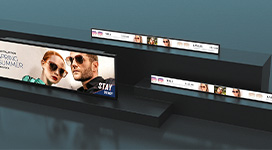
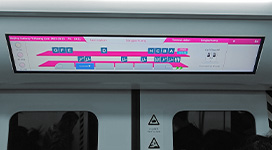
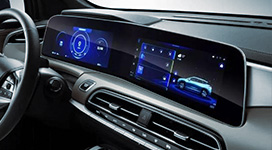
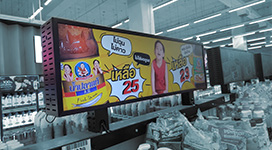
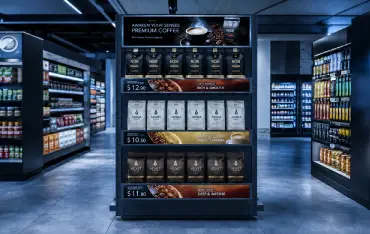
In the hyper-competitive landscape of modern commerce, the struggle for consumer attention has moved from the storefront to the literal "last inch" of the purchase journey: the shelf edge.
While traditional Electronic Shelf Labels (ESL) served the basic function of price automation, they failed to address the emotional and psychological triggers that drive conversion in high-end environments.
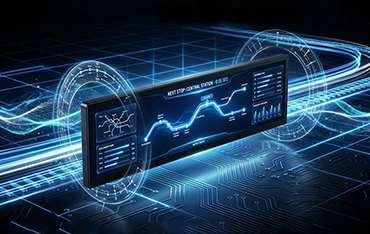
Today, the industry is witnessing a massive "Value Expansion" where forward-thinking retailers are replacing static tags with high-definition, dynamic stretched LCD bar displays. This is not just a hardware upgrade; it is a strategic shift toward data-driven, visually-rich retail automation that turns the shelf into a high-converting media platform.
Interactive Shelving: Beyond Advertisement Loops
The increasing popularity of interactive technology is reshaping the operational ecosystem at the shelf edge, upgrading it from a medium for one-way forced advertising to a real-time bridge for two-way communication.
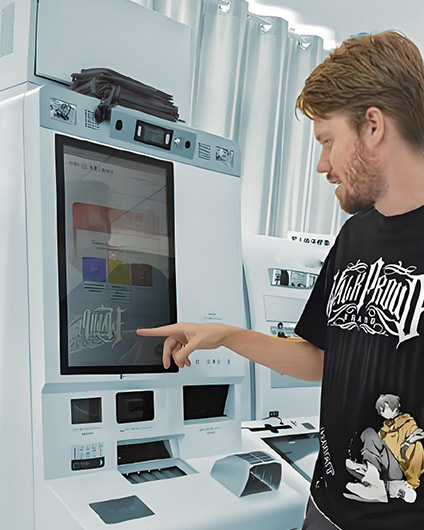
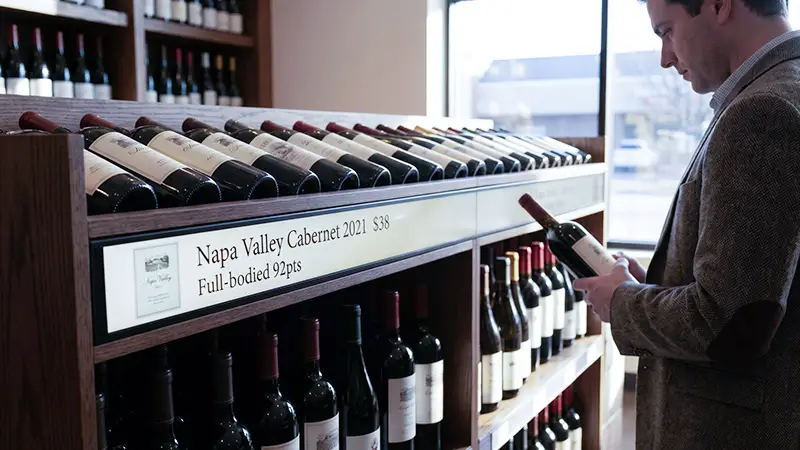
By integrating capacitive/IR touch functionality onto the surface of shelf edge LCD displays, retailers can creatively craft high-end Lift & Learn interaction scenarios.
For instance, when a customer picks up a bottle of premium wine, the elongated screen below can be triggered to switch to a poetic winery story film, showcasing professional Michelin sommelier reviews and linked chef pairing suggestions.
This deep application of interactive shelving perfectly eliminates the common "information gap" in physical retail spaces, empowering customers in their purchasing decisions and significantly reducing the abandonment rate.
24/7 Reliability: The Gomany Quality Standard
In the complex physical scenarios of commercial retail, the daily load faced by screen hardware is far beyond that of a quiet office monitor. They must withstand high dust, sharp indoor temperature fluctuations, and even incidental side impacts from customer shopping carts.
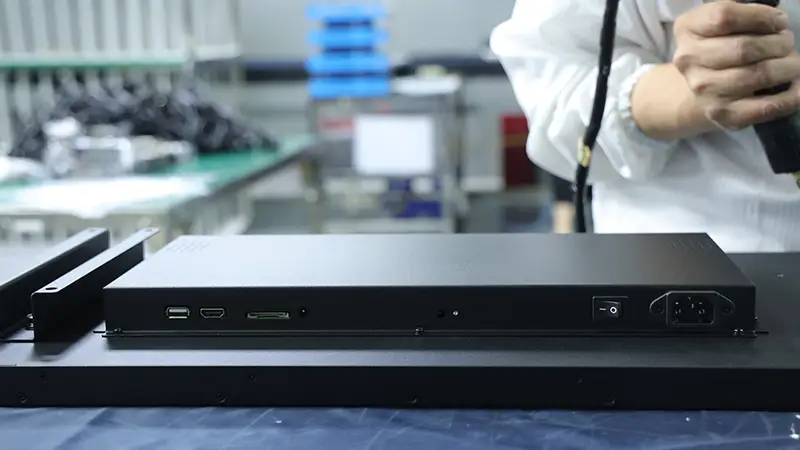
Our high-durability retail signage adopts an integrated die-cast, anti-rust, and anti-vibration reinforced all-aluminum casing in its underlying frame design, serving perfectly as a high-efficiency passive heat dissipation metal base. This structure not only ensures noise-free operation but also eliminates any mechanical friction and wear.
We also offer optional customized protective tempered glass for high-traffic corridor areas, ensuring your investment in customized stretched bar displays is not damaged by accidental scratches or knocks.
This consistent attitude of "redundant design" and "over-specification design" is the cornerstone of Gomany’s ability to continuously earn the favor of the world's mo
Centralized Intelligence: Low Latency CMS Management
The scale of modern retail automation projects means that manual content updates are no longer feasible.
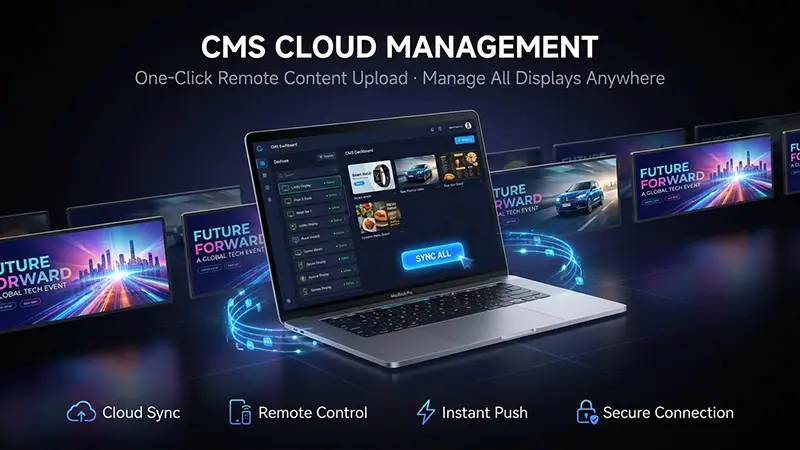
A retailer with 100 stores may be managing upwards of 5,000 shelf edge LCD displays. This is where a robust low latency CMS becomes the backbone of the operation.
Our cloud-based management platform allows IT teams to group displays by location, product category, or campaign phase. For instance, during a nationwide "Black Friday" event, content can be pushed to all 5,000 screens simultaneously with frame-level synchronization.
Engineering Core: OC-level Precision Cutting Advantage
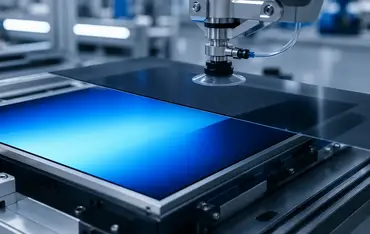
The single most critical technical factor that retail executives overlook is the distinction between products derived from original 16:9 panels and standard "Second-cut" panels.
Most low-cost suppliers take standard consumer-grade glass and mechanically slice it, which fatally compromises the liquid crystal seal.
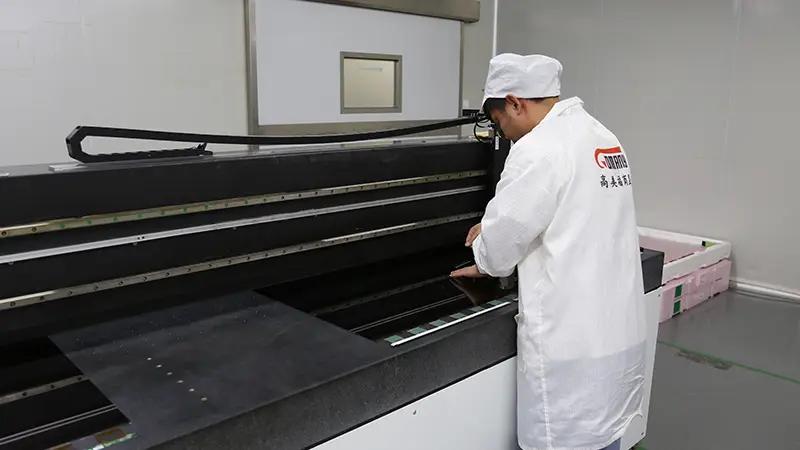
In contrast, Gomany’s competitive edge lies in the application of OC cutting technology for precision processing at the open cell stage.
By utilizing this specialized OC precision cutting, we ensure a perfect industrial-grade seal and structural integrity from day one.
This proprietary process eliminates the risk of yellowing effects or liquid crystal leakage, ensuring that your high-durability retail signage maintains its premium aesthetics for a 50,000-hour lifecycle, even in the most demanding 24/7 retail environments.
Supply Chain: Integration & Customization Capabilities
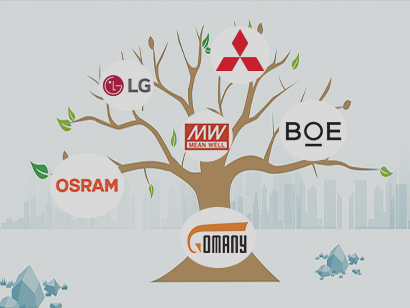
One of Gomanys core competitive advantages is our position as a vertical integrator. Unlike distributors who simply relabel third-party hardware, we maintain full control over the supply chain for stretched LCDs from raw glass procurement to final board-level assembly.
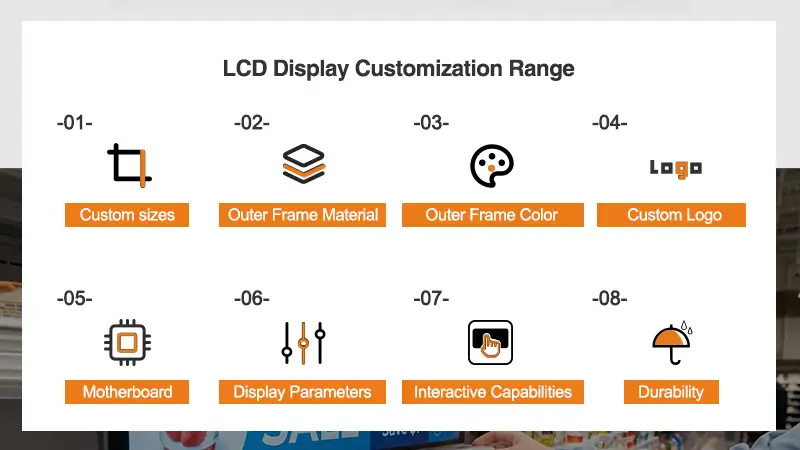
This vertical control allows us to offer unmatched customization capabilities. Retail environments are rarely "standard"; store designers often encounter structural pillars, curved shelving, or non-standard shelf depths that make off-the-shelf displays impossible to install.
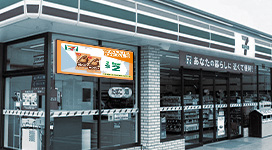
Our engineering team can modify display aspect ratios, brightness levels (up to 2000 Nits for storefront-facing kiosks), and housing materials (from impact-resistant aluminum to anti-microbial coatings for pharmacies) to meet specific architectural requirements.
By eliminating the middleman, we not only reduce the lead time for custom projects but also ensure that every custom stretched LCD is built with the same industrial-grade components as our flagship models.
Quality Commitment: Gomany “Zero-Defect” Smart Manufacturing
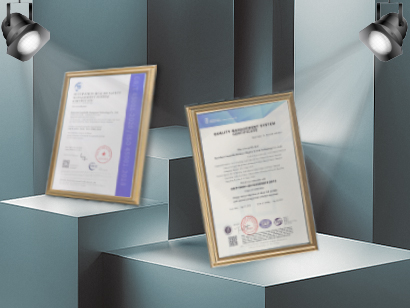
In B2B industrial-grade commercial cooperation, the long-term stability and low failure rate of equipment are the strongest foundations of trust.
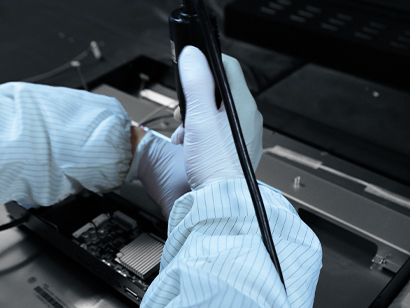
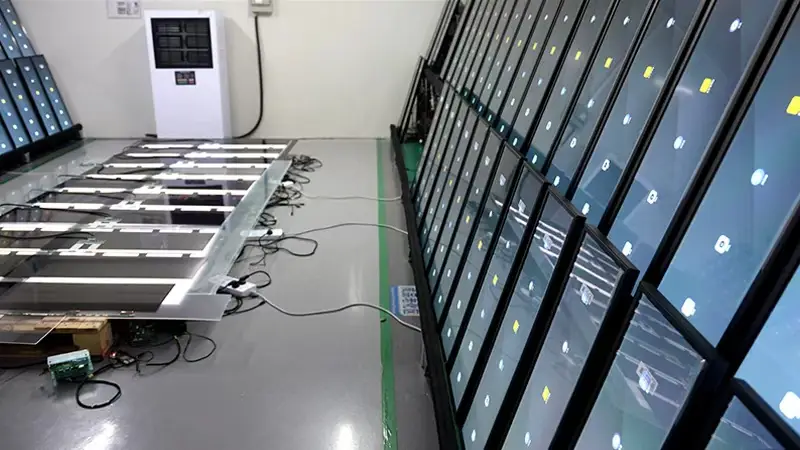
Every unit of shelf edge LCD displays leaving Gomany’s modern manufacturing facility must undergo a mandatory and rigorous 72-hour aging test under extreme high temperature and humidity, along with a comprehensive "shelf environment mechanical stress test" that simulates physical pulling and vibration on complex commercial shelves.
We also conduct detailed EMI compatibility testing on our products to ensure that the display equipment does not generate radio frequency interference with other high-tech devices in the store (such as wireless inventory scanners, handheld PDAs, and RFID anti-theft gates).
Consequently, when customers choose to invest in Gomany’s high-durability retail signage, they gain a top-tier industrial-grade product with extremely high resistance in challenging extreme retail physical environments from the very beginning.
Total Cost of Ownership: 5-Year Analysis
To truly understand the value of a shelf edge LCD displaysinvestment, one must look beyond the initial Purchase Price (CapEx) and evaluate the 5-year total cost of ownership (TCO).
A common mistake is choosing "Second-cut" displays due to a 20% lower upfront cost. However, the hidden OpEx of these units is staggering. Our financial model compares a "Native" Gomany display against a standard "Second-cut" alternative over 60 months.
●Year 1-2: The "Second-cut" unit suffers from a 15% failure rate due to thermal stress at the seal points, requiring expensive on-site technician visits.
●Year 3: The light leakage in second-cut units becomes visible to customers, diminishing the brand image and forcing a premature replacement cycle.
●Year 4-5: Gomany's OC-level precision cutting reconstruction maintains 95% of its original brightness and color accuracy, thanks to the structural integrity provided by OC precision cutting and our industrial-grade backlighting system.
When you factor in the high reliability of OC precision cutting, reduced labor costs for replacement, and the energy efficiency of our designs, the "Native-grade" display provides a 35% lower TCO over 5 years.For large-scale rollouts, this OC-level precision cutting reconstruction is the only logical choice.
Case Study: Supermarket Chains & SKU Management
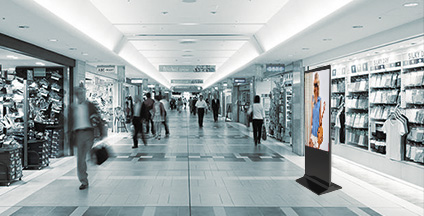
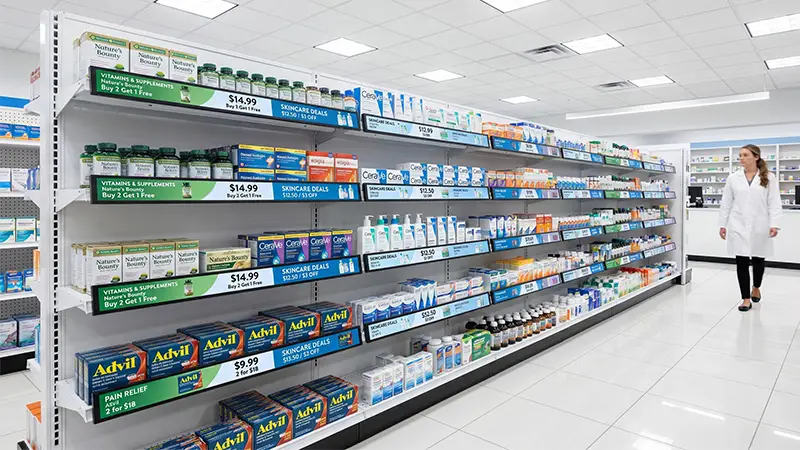
In high-traffic supermarket chains, the primary challenge is managing thousands of SKUs while maintaining dynamic pricing strategies like "day-parting" or flash sales.
Traditional paper tags are labor-intensive and prone to error, leading to pricing discrepancies that erode customer trust. By implementing shelf edge LCD displays integrated with a low latency CMS, supermarket managers can update prices globally across 500+ locations in under 60 seconds.
However, the true ROI comes from "Visual Nudging." Our data shows that using dynamic motion graphics to highlight high-margin house brands can increase their basket penetration by up to 22%. Furthermore, the ability to switch from pricing to recipe suggestions or dietary info in real-time transforms the shelf from a static storage unit into an active sales consultant.
Case Study: Supermarket Chains & SKU Management
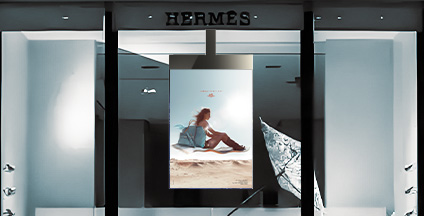
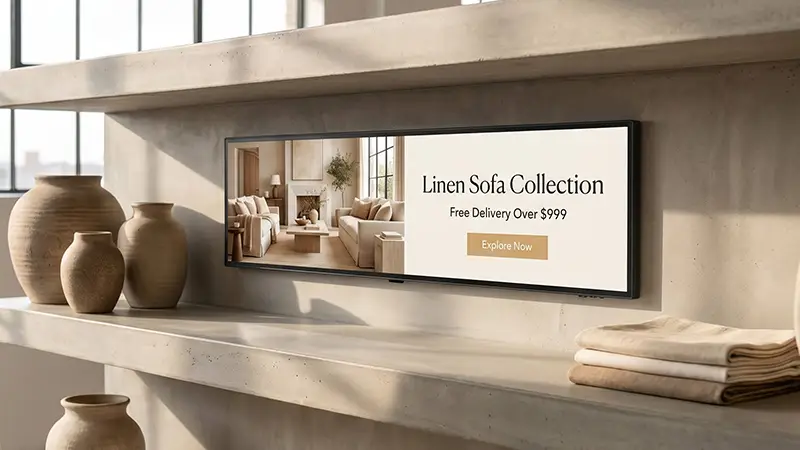
For luxury flagship stores, hardware must be invisible until it is impactful. The challenge here is not just displaying a price, but enhancing the brand's "Vibe."
Luxury buyers demand high-pixel density and ultra-thin bezels to ensure the digital elements blend seamlessly with expensive wood, marble, or glass shelving.
Gomanys customization wing specializes in ultra-slim custom stretched LCD solutions that fit into bespoke millwork without bulky power bricks or visible cables.
In this scenario, the ROI is measured by "Dwell Time" and "Brand Equity." Interactive shelf displays that trigger high-definition brand heritage videos when a customer approaches can increase dwell time by 45%, providing a unique storytelling opportunity that justifies a premium price point.
Conclusion
The decision to implement shelf edge LCD displays is a foundational step in modernizing the physical retail experience.
By focusing on native stretched LCD technology, high-impact interactive shelving, and a scalable low latency CMS, brands can create a high-converting environment that justifies its TCO through increased sales and reduced operational waste.
Whether your focus is on supermarket chains, luxury flagship stores, or pharmacy retail, the path to success lies in choosing a partner who provides not just a screen, but a complete engineering solution.
Contact Gomany today to start your journey toward a smarter, more profitable retail future.
FAQ
Q:What is the real difference between a shelf edge LCD display and an electronic shelf label (ESL)?
A:They solve different problems and are not substitutes. ESL uses e-paper (like a Kindle), refreshes a few times per day, runs on a coin cell for 5–7 years, and exists to keep price and stock information synchronized between your ERP and the shelf.
Shelf edge LCD is a full-motion display that plays video, animations, and dynamic content in real time — its job is to lift sales and dwell time, not to update prices.
Most mature retailers deploy both: ESL under every SKU for price accuracy, plus a smaller number of LCD screens on promoted categories and high-margin endcaps. Treating them as either/or is the single most expensive mistake in shelf-edge procurement.
Q:How long does a shelf edge LCD display last in a 24/7 retail environment?
A:An industrial-grade panel rated at 50,000 backlight hours will maintain acceptable brightness for approximately 8.5 years under a 16-hour-per-day, 365-day duty cycle.
That number drops fast on consumer-grade panels pulled from monitor stock — expect visible dimming within 2–3 years. Two hidden variables matter more than the datasheet number.
First, thermal load: a panel mounted directly under an LED spotlight can hit 55°C internally and lose 30% of its rated life.
Second, second-cut panels have compromised liquid-crystal seals and typically fail at the edges within 18 months.
Q:What brightness do I need for a shelf edge LCD in a supermarket?
A:For interior aisles under standard LED lighting (800–1,200 lux ambient), 300 nits sustained output is the practical minimum for clear readability.
Anything below 300 nits will look washed out no matter how good the software calibration is.
For endcaps facing entryways, windows, or skylights, specify 1,500–2,500 nits and matte anti-glare coating with a haze value of 25–35. Glossy panels reflect the overhead LED strips and become unreadable at customer eye level.
In refrigerated aisles the requirement is different — cold cathode fluorescent lighting drops ambient lux, and 400 nits with condensation-resistant coating is often adequate.
Q:Is Android or Windows better for shelf edge LCD content management?
A:Android is the industry standard for shelf edge screens because the hardware cost is lower, power consumption is 30–40% less, and remote management through ADB or MQTT is well-supported by every serious CMS vendor.
Windows only makes sense in three scenarios: the store already runs a Windows-based signage CMS with no cross-platform support, the deployment requires DirectX-heavy 3D content, or PCI-DSS compliance for payment integration is required.
For a standard supermarket, hotel, or transit shelf-edge rollout, Android on ARM chipsets like RK3288 or RK3568 is the correct default.