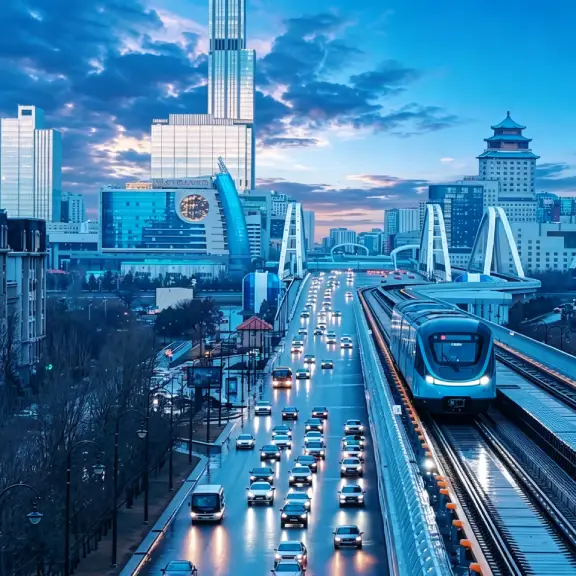
Gomany, a manufacturer specializing in stretched bar displays, has always sought to validate and improve its technology through challenging scenarios that push its products to their limits.
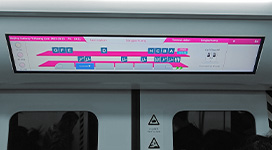
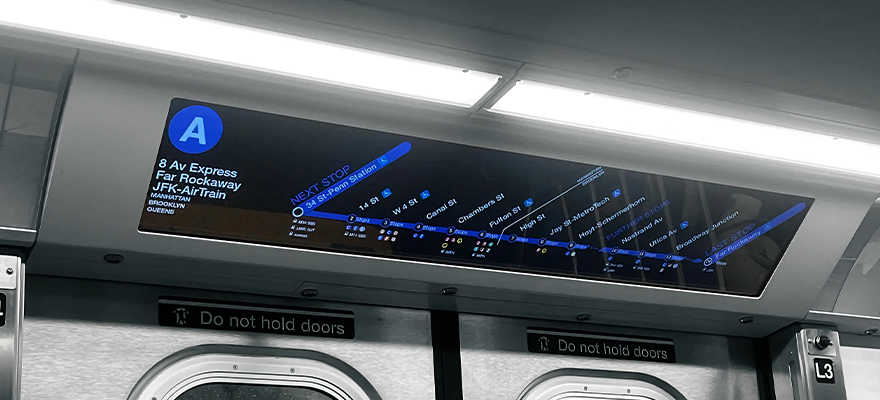
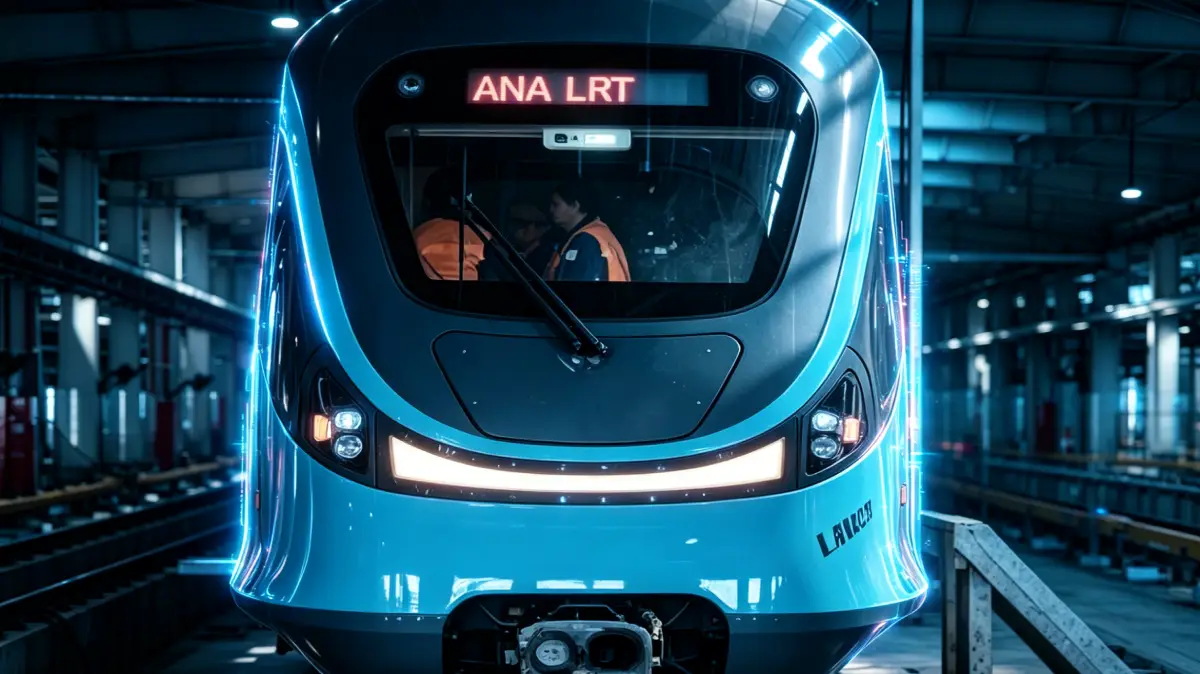
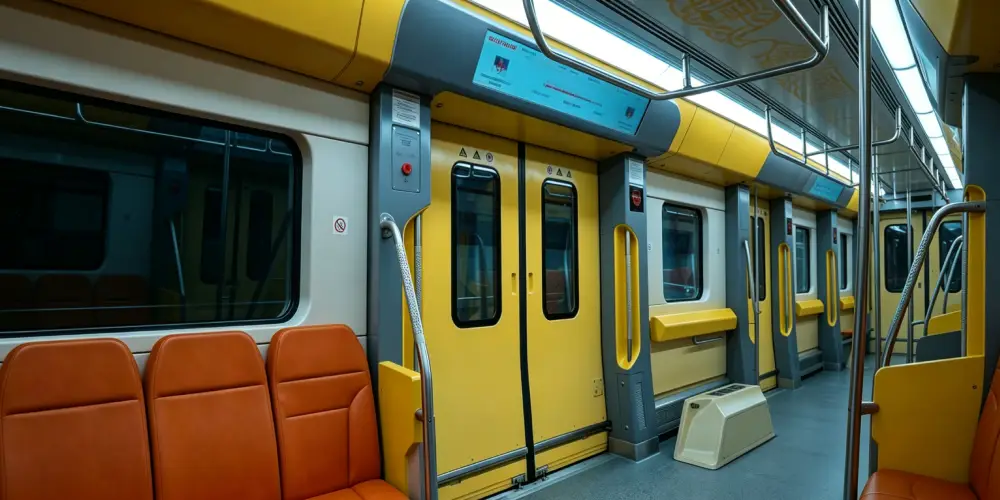
After the general contractor won the bid for the Astana Light Rail Phase 1 project's onboard passenger information system, they immediately contacted Gomany. The reason was that the trains required a long, rectangular, high-brightness display capable of withstanding severe temperature differences and continuous vibration to dynamically display station information, transfer details, and arrival announcements. Gomany happened to have a 43-inch public transport ultra-wide LCD stretched display, optimized for rail transit from frame to panel.
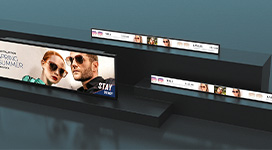
This transportation digital signage utilizes AUO's Class A native panel, combined with Gomany's proprietary OC panel adjustment technology. The standard panel is cut and recombined into a 1920*360 rectangular shape, maximizing the uniformity and color accuracy of the native OC display. With a brightness of 700 nits, it effectively handles the complex ambient lighting inside the train carriages, ensuring passengers can clearly see the content at any time.
In addition, the screen has undergone three optimization measures for rail transit scenarios: wide temperature range design, vibration-resistant structure, and long-life backlight. After rigorous testing, the procurement requirements for the display screen inside the Astana light rail carriages have been confirmed, providing Astana with clear and stable route guidance.
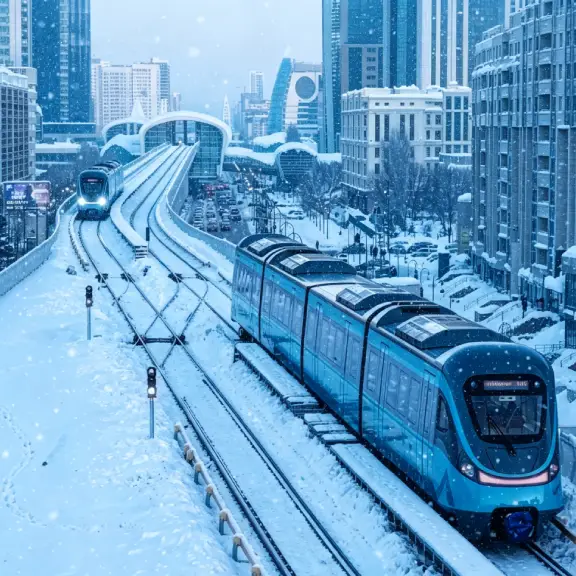
Astana's winter temperatures can drop as low as -40°C. Traditional LCDs experience slower response times and backlight failure at low temperatures.
Smart light rail requires display devices that can operate normally at -20°C and quickly wake up after storage at -40°C. Our stretched bar LCD meets this essential requirement through its wide-temperature design.
Autonomous driving means there are no human prompts from the driver. All arrival information, transfer instructions, and emergency notifications must be automatically and in real-time pushed by the onboard system.
This places higher demands on the stability of the display screen's interface, its resistance to electromagnetic interference, and its self-test and recovery capabilities.
As a major city, Astana needs a system that supports simultaneous broadcasting and display in Kazakh, English, and Russian to provide efficient travel services for local and international passengers.
This is the most critical challenge for bar LCD displays. Ordinary LCD displays will experience ghosting or even blackouts at -10℃. We conducted various tests and made adjustments to the power supply and circuitry to ensure normal operation at low temperatures.
Trains are prone to high-frequency vibrations while running on tracks, which can affect the normal operation of ultra-wide LCD stretched displays. We have optimized the overall structure and reinforced specific points to prevent the screen from developing loose cables or display issues due to long-term vibrations.
After deployment, Gomany's 43-inch ultra-wide LCD stretched displays significantly improved passenger service on the Astana Light Rail. Real-time route maps, arrival information, and operational updates are displayed clearly and intuitively within the carriages.
The 700-nit brightness ensures passengers can easily see the next station, transfer information, and terminal announcements even in direct midday sunlight or dimly lit underground sections. In terms of stability, it has remained trouble-free during the trial operation to date.
Regarding multilingual services, the real-time trilingual switching function allows both foreign tourists and local residents to see station names displayed alternately in Kazakh, English, and Russian on the same screen. This built-in multilingual engine requires no manual intervention or font replacement; it is entirely triggered automatically by system commands.
The successful implementation of this LRT project means that during Astana's long winters, passengers will almost never miss their stops due to display malfunctions. This not only reduces spare parts replacement costs for the operator but also genuinely improves the passenger travel experience.
Contact me